English
 中文简体

Grey cast iron and ductile iron are both ferrous casting alloys, but they behave very differently in service. The core difference is graphite shape: grey iron contains flake graphite, while ductile iron contains nodular graphite. That single change in microstructure raises tensile strength, elongation, and impact resistance in ductile iron, while grey iron retains an edge in vibration damping and thermal conductivity. For electrical conduit fittings, the choice usually comes down to mechanical load, corrosion exposure, and cost. This article gives you the practical comparison.
What Is the Fundamental Difference Between Grey Cast Iron and Ductile Iron?
The fundamental difference is graphite morphology. In grey cast iron, carbon solidifies as flake graphite, which creates internal stress concentrators and makes the material brittle but excellent at damping vibration. In ductile iron, also called nodular iron, magnesium or cerium is added before casting so graphite forms as spheroids. These rounded nodules interrupt the metal matrix far less, so the material can yield and elongate before breaking.
Both alloys share a similar chemical base: iron, carbon, silicon, and manganese. The treatment step is what separates them. ASTM A48 covers grey iron, while ASTM A536 and ISO 1083 cover ductile iron grades. A common grey iron grade is Class 30, with about 30 ksi tensile strength. A common ductile iron grade is 65-45-12, meaning 65 ksi tensile strength, 45 ksi yield strength, and 12 percent elongation. That elongation value is the clearest sign of ductility.
How Do Mechanical Properties Compare?
Ductile iron wins on strength and ductility, while grey iron wins on damping and thermal conductivity. The table below summarizes typical values for common grades.
| Property | Grey Cast Iron (Class 30) | Ductile Iron (65-45-12) |
|---|---|---|
| Tensile strength | 30 ksi (207 MPa) | 65 ksi (448 MPa) |
| Yield strength | Not typically specified | 45 ksi (310 MPa) |
| Elongation | Less than 1% | 12% |
| Hardness | 170-230 HB | 170-210 HB |
| Vibration damping | Excellent | Moderate |
| Thermal conductivity | Higher | Lower |
| Machinability | Excellent | Good |
Which One Handles Vibration and Thermal Cycling Better?
Grey cast iron handles vibration better because its flake graphite absorbs energy and converts it to heat. This is why machine tool bases, engine blocks, and pump housings often use grey iron. Ductile iron, by contrast, has a more continuous matrix and transmits more vibration.
For thermal cycling, ductile iron generally performs better. Its higher ductility allows it to accommodate expansion and contraction without cracking. Grey iron can develop thermal fatigue cracks under repeated heating and cooling, especially in restrained geometries. However, grey iron's higher thermal conductivity helps it dissipate heat faster, which can be an advantage in brake drums and clutch plates.
What About Corrosion Resistance and Machinability?
Ductile iron has slightly better corrosion resistance in many environments because its nodular graphite does not form continuous galvanic paths like flake graphite. That said, both irons will rust in unprotected outdoor service and usually need a coating such as zinc, paint, or powder coating. Grey iron is easier to machine. Its flake graphite acts as a built-in chip breaker, so cutting tools last longer and surface finishes are easier to achieve. Ductile iron produces stringy chips and may need more careful tooling, but modern inserts handle it well.
Cost and Availability: Which Is More Economical?
Grey cast iron is usually cheaper for the same pattern because it requires no magnesium treatment, no tight process control for nodularity, and often no heat treatment. Ductile iron costs more due to alloy additions, treatment, and testing. However, ductile iron can be the better value when you need higher strength or ductility. A thinner ductile iron section can replace a heavier grey iron section, saving weight and material. For high-volume simple parts, grey iron remains the economical default.
Practical Applications: Where Each Iron Type Fits
Grey iron is specified for engine blocks, cylinder liners, machine tool bases, flywheels, and large housings where damping and low cost matter. Ductile iron is chosen for crankshafts, gears, suspension arms, pipe fittings, and pressure vessels where strength and toughness are required.
In electrical conduit systems, iron fittings must withstand mechanical pull, corrosion, and sometimes fire. Malleable iron fittings are often used for liquid-tight and rigid connections because they combine strength with some ductility. While malleable iron is not the same as ductile iron, both rely on nodular or compacted graphite to avoid the brittleness of grey iron. If you are comparing fitting materials, malleable iron is a practical middle ground for many conduit installations.
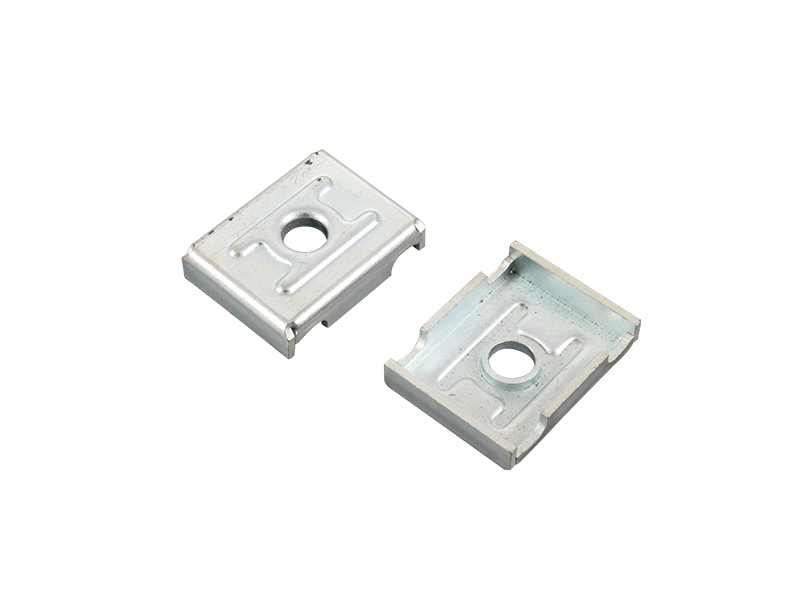
 90-Degree Malleable Iron Liquid-Tight Conduit ConnectorA 90-degree malleable iron connector with sealing washer and heavy-duty locknut, suited to liquid-tight conduit terminations where moisture sealing and pull-out resistance matter.View Product →
For example, a 90-degree liquid-tight connector needs to seal against moisture and resist pull-out. A rigid compression coupling must hold conduit securely under vibration. A set-screw connector offers fast installation where threads are not required. These are common requirements in industrial and commercial wiring.
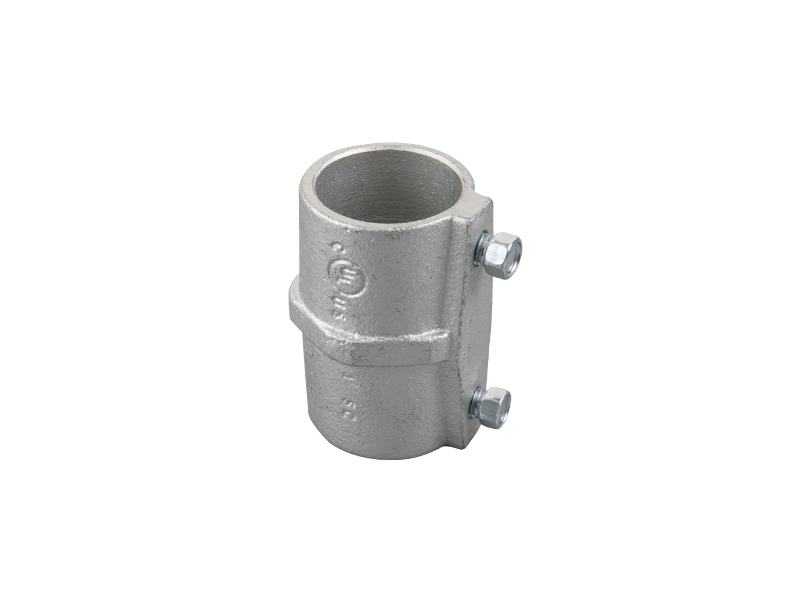
 Malleable Iron Rigid Compression Coupling for ConduitStraight equal-shape malleable iron coupling in sizes from 1/2 inch to 2 inch, designed for rigid conduit connections that need secure holding under vibration.View Product →
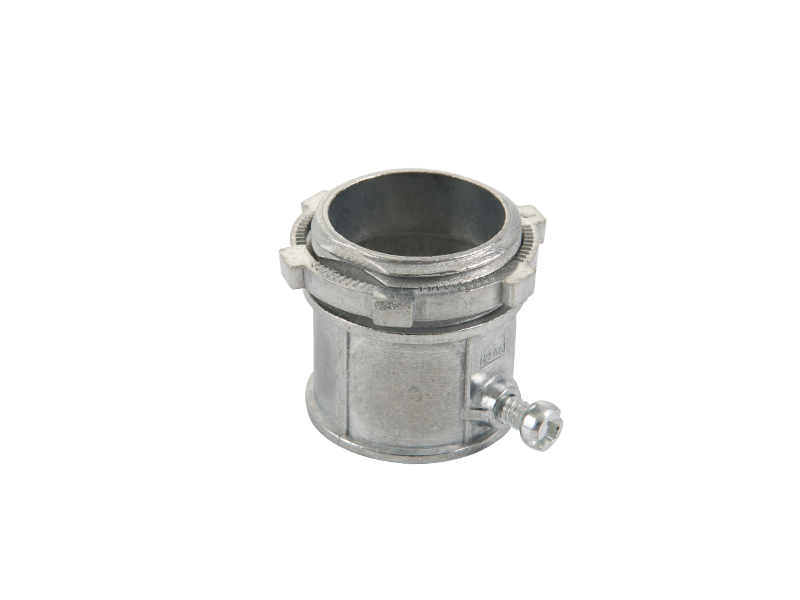
 Malleable Iron Set Screw Connector for ConduitStraight malleable iron set screw connector in various sizes, providing a waterproof connection for wire safety in conduit runs where threads are not required.View Product →
How to Choose for Electrical Conduit Fittings
Choose ductile or malleable iron when you need impact resistance, pressure tightness, or higher pull-out strength. Choose grey iron only when damping, thermal conductivity, or lowest cost is the priority. In conduit work, the decision usually follows the environment: wet, corrosive, or high-vibration locations favor ductile or malleable iron with a protective coating. Dry, indoor, lightly loaded runs may accept grey iron or nonmetallic fittings. Always check the applicable code, such as NEC Article 300 and 500, and the fitting's listing. Also consider thread type, size, and compatibility with the conduit material.
- Environment: wet, corrosive, or high-vibration locations favor ductile or malleable iron with coatings.
- Mechanical load: higher pull-out and impact requirements call for ductile iron grades.
- Code compliance: verify NEC, UL, or CSA listing for the specific fitting type.
- Cost: grey iron is cheaper, but ductile iron may reduce weight and total installed cost.
If you are sourcing iron fittings for a project, ask for material certificates, tensile test reports, and coating thickness measurements. A supplier that understands both grey and ductile iron can help you avoid over-specifying or under-specifying. For a deeper look at iron fitting terminology, see this explanation of why malleable iron is not malleable.
Frequently Asked Questions
Is ductile iron stronger than grey cast iron?
Yes. Ductile iron typically has at least twice the tensile strength of grey iron and much higher elongation. For example, 65-45-12 ductile iron reaches 65 ksi tensile strength, while Class 30 grey iron reaches about 30 ksi.
Can grey cast iron and ductile iron be welded?
Welding either iron is difficult. Grey iron is prone to cracking because of its flake graphite and low ductility. Ductile iron can be welded with special procedures, preheating, and nickel-based electrodes, but it is not a routine process. For conduit fittings, mechanical connections are preferred.
Which iron is better for outdoor electrical installations?
Ductile or malleable iron is usually better outdoors because it resists impact and cracking. However, both require a protective coating. Galvanized or PVC-coated iron fittings are common for corrosion resistance.
Does graphite shape affect corrosion resistance?
Yes. Flake graphite in grey iron can create continuous paths for galvanic corrosion, while nodular graphite in ductile iron is more isolated. The difference is modest, so coatings remain the primary corrosion control.
Grey cast iron and ductile iron are not interchangeable in every application. Grey iron gives you damping, thermal conductivity, and low cost. Ductile iron gives you strength, elongation, and impact resistance. For electrical conduit fittings, match the iron type to the mechanical load, corrosion exposure, and installation conditions. If you need iron fittings that balance durability and cost, review the material grade and coating before you buy. The right choice is the one that meets the code, the environment, and the service life you expect.
 Request A Quote