English
 中文简体

Can galvanized pipe be used for natural gas? Yes — under the National Fuel Gas Code (NFPA 54), galvanized steel pipe is an approved material for fuel gas piping. Galvanized pipe is steel pipe coated with a protective zinc layer by hot-dip galvanizing, and the model code places it on the list of acceptable pipe materials for natural gas. The practical answer, however, depends on your local jurisdiction, where the line runs, and a set of historical concerns that still shape inspector attitudes. For most indoor gas lines, black steel pipe remains the safer and more widely accepted choice.
What the National Fuel Gas Code Says About Galvanized Pipe
NFPA 54, the National Fuel Gas Code, explicitly permits galvanized steel pipe for natural gas service. The International Fuel Gas Code and the Uniform Plumbing Code take the same position, listing galvanized steel as an acceptable material when the pipe is properly sized, threaded, and supported. There is no model-code ban on galvanized pipe for gas.
The catch is local authority. Municipalities routinely amend model codes, and those amendments are what an inspector actually enforces. In some jurisdictions galvanized is accepted anywhere; in others it is approved only for outdoor, above-ground runs; in a few, it is rejected outright for fuel gas. The variation traces back to the zinc-flaking failures of early gas systems, and that reputation still influences local rules today.
The Zinc Flaking Problem: Why Caution Persists
Older galvanized pipe was often produced with a thick, loosely bonded zinc coating that could peel away from the inner wall. Dry manufactured gas — coal gas, widely used before natural gas pipelines arrived — flowed through the line and carried these flakes downstream, where they clogged regulator orifices, valve seats, and burner jets. A clogged gas passage is not just a nuisance; it can cause incomplete combustion and unsafe appliance operation.
Modern natural gas is dry, clean, and chemically stable, and current hot-dip galvanizing produces a tight, uniform coating that adheres far better than the old batches. Flaking is rare in a system built with modern materials. The risk is not zero, and because the consequence can be a failed valve or a sooting appliance, most plumbing and heating contractors still default to black steel indoors even where galvanized is legal.
Galvanized vs. Black Steel: Side-by-Side Comparison
For residential and light commercial gas piping, two materials dominate: black steel for indoor distribution and galvanized for weather-exposed runs. The table below compares them across the factors that matter most during installation and service life.
| Property | Galvanized pipe | Black steel pipe |
|---|---|---|
| Corrosion resistance | Excellent; the zinc layer protects the base steel | Poor when exposed to moisture; rusts quickly |
| Indoor code acceptance | Often restricted by local amendments | Universally accepted for indoor gas lines |
| Outdoor durability | Excellent for weather-exposed runs | Requires a weather-resistant coating or paint |
| Relative material cost | Higher, due to the galvanizing process | Lower |
| Zinc flaking risk | Low but possible, especially in old pipe | None |
| Threading behavior | Good; the coating may chip at cut threads | Clean, consistent threads |
| Typical gas-line role | Outdoor risers, meter connections, exposed runs | Indoor distribution and branch lines |
The short version, reading the table in reverse: use black steel indoors, consider galvanized outdoors, and check the local code before either.
Where Galvanized Pipe Makes Sense for Natural Gas
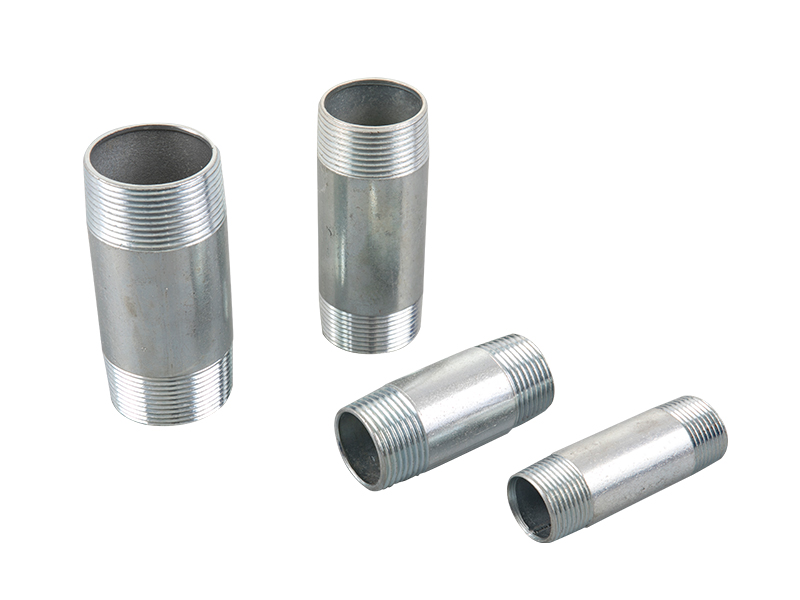
The one place galvanized pipe earns its role is outdoor exposure. Bare black steel hit by rain, sprinklers, or coastal humidity can rust within months and develop pinhole leaks in a few years. The zinc layer on galvanized pipe corrodes preferentially and slowly, giving the steel underneath a much longer service life in weather-exposed locations.
For that reason, many jurisdictions require — or at least accept — galvanized pipe for outdoor risers, meter connections, and exposed runs along building exteriors. The fittings in these runs should offer the same corrosion protection; malleable iron set screw couplings with a galvanized finish are a common choice for this service because they thread onto standard NPT pipe and hold up well outdoors. Indoor branch lines, by contrast, should remain black steel.
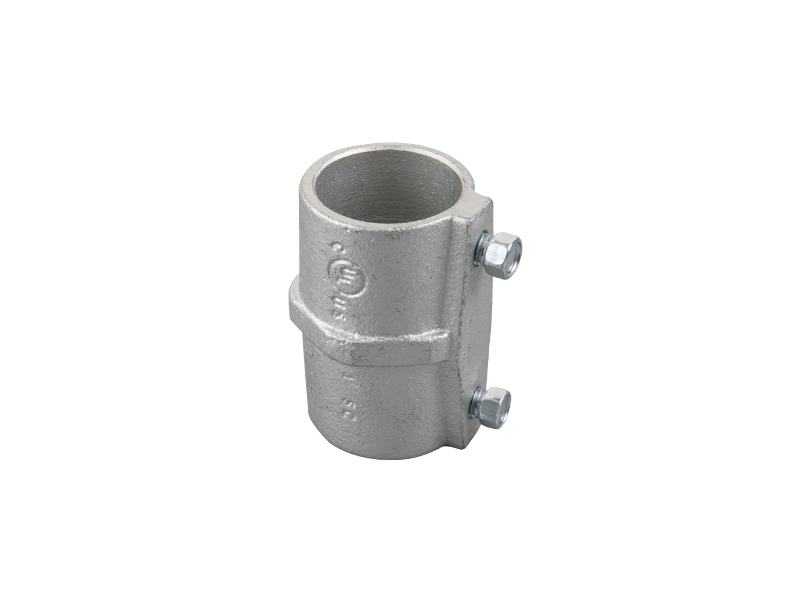 Malleable iron set screw type coupling- Ningbo Xiatao Plastic Industry Co., LtdStructure: UniversalMaterial: Malleable ironBrand Name: XiataoSpecification: Bends, Elbow, Tee, Cross, Socket, Nipple, Plug, Union, Bushi...View Product →
Fittings, Threads, and Joint Sealing
Steel gas pipe in North America almost always uses National Pipe Thread (NPT) tapered threads — the same three-quarter-inch and one-inch sizes used across plumbing, plus larger diameters on main distribution lines. Cutting threads strips the zinc coating at each joint, so the threaded connection is the weakest point of every galvanized gas line and must be sealed with a product rated for fuel gas.
The sealing procedure matters as much as the material choice, and the steps are the same for galvanized and black steel:
- Clean both threaded ends with a wire brush to remove debris, rust, or loose zinc.
- Wrap yellow PTFE tape clockwise around the male threads, or apply a pipe-thread compound labeled for fuel-gas service.
- Thread the fitting on by hand for two or three turns, then tighten with two wrenches — one holding the fitting, the other turning the pipe.
- Wipe away excess sealant, pressurize the line, and check the joint with soapy water before covering it.
Reviewing the common thread types and sizes used on steel fittings helps avoid mismatched connections on the job. For straight runs, steel rigid couplings deliver reliable thread engagement and pressure integrity when they match the pipe material, wall thickness, and thread type.
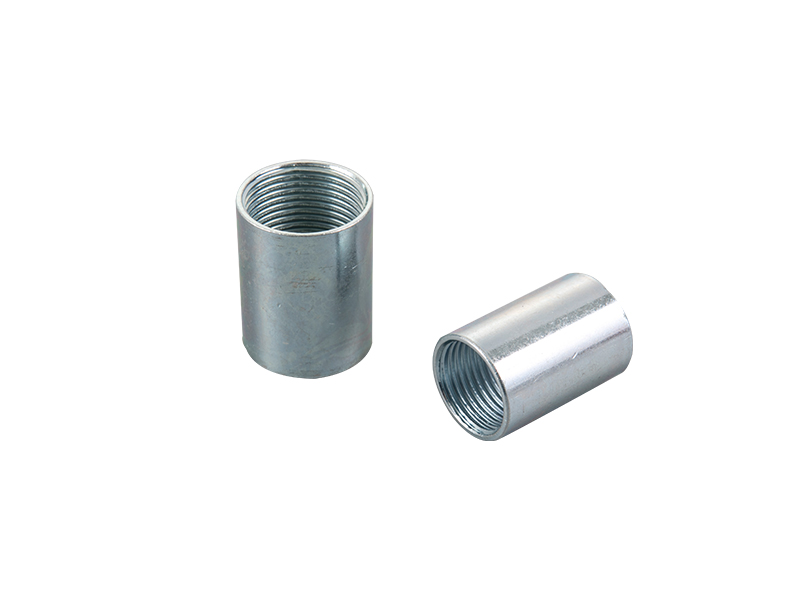 Steel Rigid Electrical Conduit Coupling- Ningbo Xiatao Plastic Industry Co., LtdConnection: FemaleStructure: UniversalFlexible or Rigid: RigidMaterial: Carbon SteelStandard: StandardType: Threaded ConnectionHead Code:...View Product →
Installation Rules That Apply to Any Steel Gas Line
Whether you choose galvanized or black steel, the following code requirements are non-negotiable. They are what separate a safe gas line from a future service call.
- Install a sediment trap (drip leg) at every appliance connection to catch debris, moisture, and any coating flakes that settle out of the gas stream.
- Support horizontal runs with hangers or straps at least every 10 feet (3 m), and support vertical runs at every floor level.
- Bond the gas piping system to the building's electrical grounding electrode using an approved grounding clamp.
- Test every joint with soapy water or an electronic leak detector before opening the service valve.
- Purge the line of air according to local utility requirements before lighting any appliance.
- Do not reuse old fittings with damaged threads; replace them with new material of the same grade and schedule.
If Your House Already Has Galvanized Gas Pipes
Older galvanized gas piping is not automatically dangerous, but it does deserve a serious inspection. When access to the line is open — during a remodel, for instance — look for loose scale on the threads, flaking zinc, a red-and-white powdery buildup, or wet spots along the pipe. Any of those signs points to a system that should be repaired or replaced rather than patched.
Keeping the pipe dry and the joints properly sealed is the core of galvanized steel corrosion prevention in a gas-line context. If the pipe is more than 30 years old, visibly corroded, or was converted from water service, plan to replace it with black steel. A licensed plumber can soap-test every joint and complete the assessment in about an hour.
Frequently Asked Questions
Can galvanized pipe be buried underground for natural gas?
Most codes prohibit unprotected galvanized steel underground. Soil chemistry and stray electrical currents attack the zinc and create corrosion cells that eat through the pipe wall. Approved alternatives are polyethylene (PE) plastic pipe, cathodically protected steel, or steel with a factory-applied corrosion-protection system.
Does propane behave differently than natural gas in galvanized pipe?
No. Both are dry gases, and neither aggressively attacks the zinc coating. The same code and inspection rules apply to propane piping, so the local jurisdiction — not the fuel type — determines what is allowed.
Can I paint galvanized pipe black to make it look like black iron?
Painting changes the appearance, not the material classification. Inspectors still treat the pipe as galvanized, and paint can hide corrosion developing at threads and fittings. Check with the local building department before attempting it.
What pressure does a residential natural gas line run at?
Residential service is usually regulated down to about 1/4 to 1/2 PSI (7 to 14 inches of water column) at the appliance, although the distribution piping may carry 2 to 5 PSI before the final regulator. Galvanized and black steel pipe are both rated well above these pressures when properly threaded.
Why is my gas supply line galvanized but the branch lines are black?
Builders often used galvanized for the exposed outdoor portion and switched to black iron once the line entered the building. That combination, common in homes built between the 1950s and 1980s, reflects the code of the era and usually needs periodic inspection rather than immediate replacement.
The bottom line: galvanized pipe is legal for natural gas under NFPA 54, but black steel is the safer, more predictable choice for indoor runs, and the local inspector decides what is enforceable in your area. When you do use galvanized — typically outdoors — match it with corrosion-resistant fittings, gas-rated sealant, and a drip leg at every appliance. When in doubt, call the building department or a licensed plumber before you turn the wrench.
 Request A Quote